- Internship #1 (Master): Hitting Pause when Things Get Heated
- Internship #2 (Master): Feeling the Ripples while Swimming
Internship #1 (Master): Hitting Pause when Things Get Heated
Keywords: Cellular cycle, Quiescence, Cancer, Stress, Temperature.
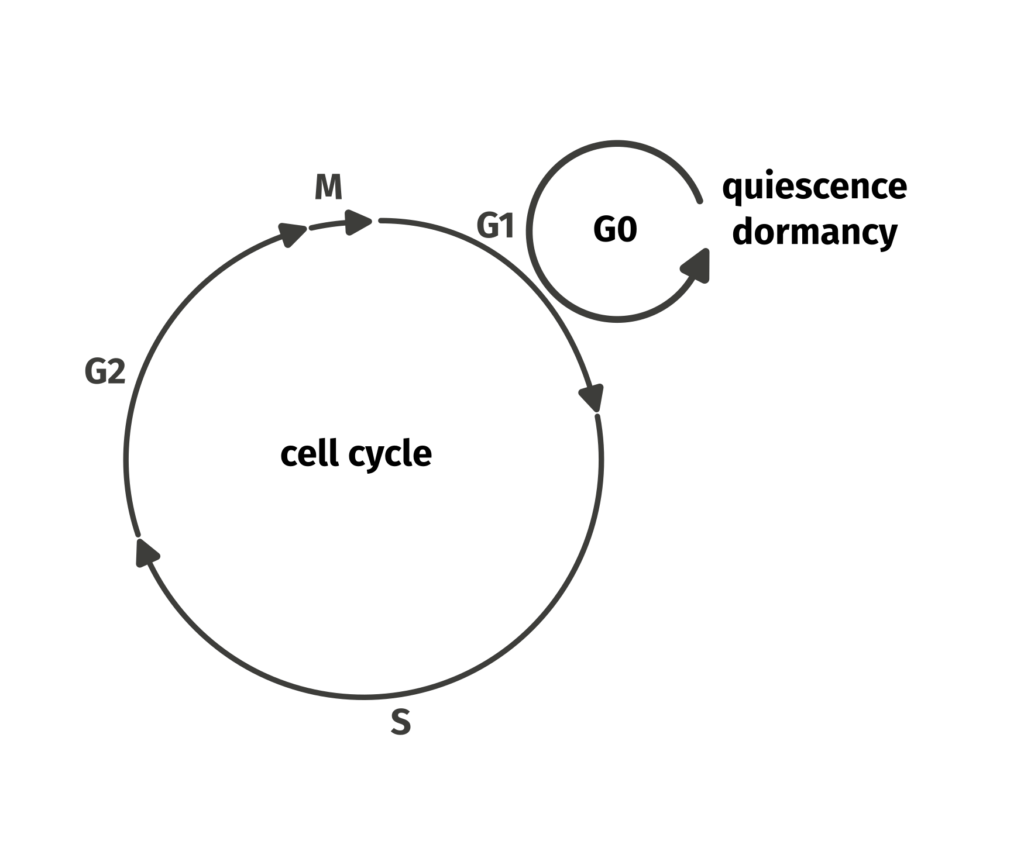
Cells can dynamically switch between proliferative and quiescent states, with significant implications for the physiology of multicellular organisms. This flexibility allows developing embryos to pause when subjected to stress and cancer tumors to escape drug treatment [1].
Quiescence is particularly difficult to explore and characterize, as it is a transient, reversible state that can be induced by many external factors, including thermal stress. Since little is known about how a temperature perturbation can affect the metabolism of human cells beyond the heat-shock response, we propose to explore how this existing switch between quiescence and proliferation is modified by thermal stress.
The purpose of the internship is to characterize the distribution of quiescent states in a live cell population in response to a temperature perturbation [2, 3]. The student will need to perform cell culture and live microscopy, followed by image analysis.
A background in cell culture is a plus, but not an absolute requirement. A training background in biology or experimental physics is welcome. The internship should last at least 4 months, and can be followed by a thesis.
Internship #2 (Master): Feeling the Ripples while Swimming
Keywords: Micropatterning, Tracking, Microswimmers.
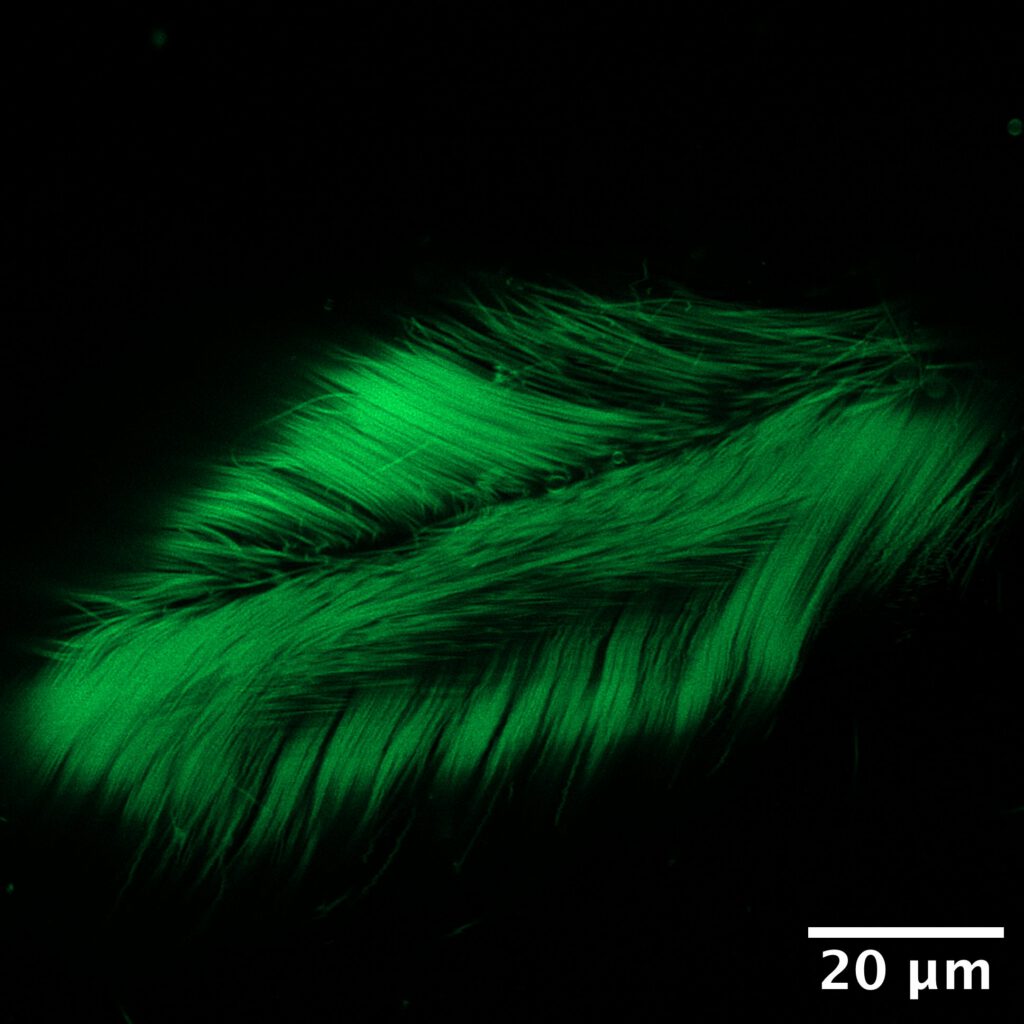
Marine invertebrates go through a biphasic cycle in which a swimming larva turns into an attached and much less motile adult [4]. Many animals go through this type of development, including sea urchins, sea stars, corals, and sea anemones. During this transition, the larva interprets mechanical and chemical cues to trigger this metamorphosis.
For now, there is no clear mechanism linking sensory input to the start of the developmental program.
This project aims to identify a standardized mechanical cue by designing micropatterned substrates and running behavioral experiments. The project will start with the design and characterization of micropatterned substrates included in the millifluidic chip. Behavioral experiments will consist of swimming assays in microfabricated chambers. Swimming statistics will be extracted from the time-lapses with image analysis to identify potential biases introduced by the surface roughness [5].
Based on the results of these studies, the project can be further extended by investigating larval ciliary activity in the vicinity of the micropattern, to propose mechanisms for mechanosensory inputs.
A training background in experimental physics or engineering is welcome. The internship should last at least 4 months, and can be followed by a thesis.
References
[1] Daniela Senft and Ze’ev A. Ronai. Adaptive stress responses during tumor metastasis and dormancy. Trends in Cancer, 2(8):429–442, 2016.
[2] Sabrina L. Spencer, Steven D. Cappell, Feng-Chiao Tsai, K. Wesley Overton, Clifford L. Wang, and Tobias Meyer. The proliferation-quiescence decision is controlled by a bifurcation in CDK2 activity at mitotic exit. Cell, 155(2):369–383, 2013.
[3] Ana Rita Araujo, Lendert Gelens, Rahuman S. M. Sheriff, and Silvia D. M. Santos. Positive feedback keeps duration of mitosis temporally insulated from upstream cell-cycle events. Molecular Cell, 64(2):362–375, 2016.
[4] Michael G. Hadfield, Eugenio J. Carpizo-Ituarte, Kimberly Del Carmen, and Brian T. Nedved. Metamorphic competence, a major adaptive convergence in marine invertebrate larvae. American Zoologist, 41(5):1123–1131, 2001.
[5] Marte Lønnum, Madeline M. Schuldt, Johan Hovland, Jose Davila-Velderrain, and Lena Van Giesen. Developmentally timed sensory integration enables efficient larval dispersal. iScience, 29(9), 2026.